Tuesday, 20 November 2018

Avengers and the 60s

The Swinging 60s

People were poorer and things were more expensive
Children were more respectful towards adults
Baths once a week
Police officers could smack the children
Single women could get the contraceptive pill

Famous bands were:
  • The Rolling Stones
  • The Beatles
  • The Who
  • Led Zeppelin
Most famous sportspeople:
  • Muhammad Ali
  • Willie Mays
  • Wilt Chamberlain
  • Johny Unitas
Political leaders:
  • Josh F. Kennedy - American President 
  • Robbert F. Kennedy - Attorney General
  • Martin Luther King - Peace Fighter
  • Richard Nixon - American President 
  • Conservatives and Labour Parties


The fashion industry was at its prime. Mod-related fashions such as the miniskirt simulated fashionable London shopping areas such as Canarby street and Kings Road, Chelsea. David Bailey sought to define Swinging London in a series of large photographic prints. His subjects include Michael Caine and Terence Stamp, John Lennon, Paul McCartney and Mick Jagger


The Avengers (1960)

ITV (ABC) produced the show.
Primary and secondary audience
  • adults(15+), working class, interested in action and excitement, male and female.
  • adults(15+), upper class (represented by the characters) male and female
The first episode aired 7th of January 1961
There were six series 
The last episode aired 21st of May 1969
For series 4, the budget per episode was £56,000
The Avengers 'Hit it Big'  in America and was on of the few ITV shows to do so.

The £2,000,000 from ABC.

  • Since the producers were given this large then-unheard of sum of money, they could spend it on filming the show with 35mm film rather than videotape. This was essential as it was a method compatible with U.S. methods.
  • The new filming type allowed for more flexibility during filming as they now used single camera set up.
  • This also allowed for more diverse camera angles and shots as well as outdoor location shooting.
  • There were also better props and better ways of filming (helicopters etc.).
  • All location work on series four was shot mute with the soundtrack created in post production and dialogue scenes were filmed in the studio.
  • The music was also much more sophisticated.
Series 4 brought with it new and old characters:
    Patrick Macnee Columbo 1975.JPG
  • Patrick Macnee remained John steed throughout the entire run of the show. Macnee had been called up for the United Kingdom Armed Forces. He joined the Navy as an ordinary Seaman in October 1942 and left as a lieutenant in 1946. He had also performed in Scrooge as the young Jacob Marley. As well as many small parts in American and Canadian television and theatre.
  • Diana Rigg took the role of Emma Peel, this was a character who was created to appeal to men. Rigg's professional debut was in the RADA production of The Caucasian Chalk Circle at the York Festival in 1957 which was a theatrical production. Appearing on The Avengers was her first television Debut.
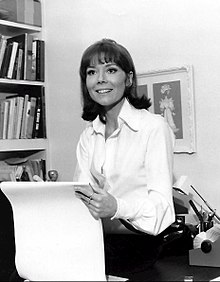
Diana Rigg 1973.jpg
The BBC started to abolish its 'stuffy Auntie' image due to the competition that ITV brought. The class lines split class loyalty completely, with ITV tending to be more popular with the working class. Though when "youth culture" started to become popular it was 'cool' to be working class and so ITV's popularity and especially the popularity of The Avengers skyrocketed compared to the BBC's The Forsyte Saga which only lasted half a year. This was because of The Avenger's appeal to all classes giving the show more popularity


Tuesday, 13 November 2018

Serial TV Drama

Exploring the TV drama genre and conventions

What is the difference between TV drama and a Soap Opera?


Drama is more serious than soap and no as exaggerated.

A TV drama is a one off drama with little to no continuation, a serial TV drama is a long running show with a plot that develops every episode.

TV Drama can be split into many sub genres

  • Crime Drama.
Broadchurch
Sherlock
Gotham

  • Period Drama. 
Robin Hood
Call the Midwife
Downton Abbey
  • Teen Drama
13 Reasons Why
Riverdale
Pretty Little
  • Medical Drama
The Good Doctor
House
Grey's Anatomy
  • Science-Fiction Drama
Doctor Who
The Flash
Stranger Things
  • Fantasy Drama
Vampire Diaries
Supernatural 
Once Upon a Time
  • Political Drama
House if Cards
Designated Survivor
The Crown


NARRATIVE AND CHARACTERS


Serial vs Series

Series has the same characters throughout with new stories every episode whereas a serial has the same characters with an ongoing story line.

Reasons why serial is popular
  • Typically set in locations that the viewers know of and most likely live in/near.
  • Blamer/Kats Theory diversion


Friday, 9 November 2018

Television: Industries and Ownership

The term PSB (public service broadcast) is a term used for public benefit of a broadcast rather than commercial benefit.
There are three ways that a commercial broadcast makes a profit: subscription, sponsorship and advertisement.
In the UK, BBC is the main PSB channel.
Because PSB is funded by the public, they are legally obliged by law to:

  •  deliver impartial news.
  • represent all diverse communities of people.
  • support learning for people of all ages.
  • to show the most creative, highest quality and distinctive output and services.
  • to represent the UK's culture to the world.
In January 1927 the BBC was established by Royal Charter as the British Broadcasting Corporation.

BBC Channels.

  • BBC 1.
  • BBC 2.
  • BBC 3.
  • BBC 4.
  • CBBC.
  • CBeebies.
  • BBC News.
  • BBC Parlement.
  • BBC Alba.
BBC Mission.
Most Popular BBC 1 programmes:
  • Doctor Who,
  • Sherlock,
  • Strictly Come Dancing,
  • Bodyguard,
  • Eastenders,
  • Luther.
Most Expensive to make is Game of Thrones, however of the BBC it is The Crown.

Other platforms of The BBC:
  • Radio,
  • iPlayer.
BBC's income:
  • BBC's income is primarily from the TV licences.
However there are other ways the BBC to generate income:
  • Selling its programmes to other broadcasting companies.
  • Selling audio tapes and CDs of its best radio programmes
  • Selling videos and DVDs of its best TV shows.
  • selling books based on programmes, and magazines about science and natural history.
Advantages of being publicly owned:
  • By being publicly owned, they're more popular as they're trusted more.
  • They have guidelines set for them so their audience know what they're about.
  • Guaranteed income


Commercial Institutions 


These generally have no guaranteed income therefore it;s mandatory that they have means of profit:
  • Sponsorship
  • Product Placement 
  • Advertisement
  • Subscription  


ITV.

Channels:
  • ITV1.
  • ITV2.
  • ITV3.
  • ITV4.
  • ITVBe.
  • CITV.
  • ITV Box Office.
  • ITV HD.
  • The Store.
ITV's mission statement:
By developing and managing the rights to content, ITV is able to maximise the value of its programme brands across a range of revenue streams, making ITV a more balanced business and enabling it to drive value from different revenue models.

Most popular ITV programmes:

  • Everdale.
  • The X Factor.
  • Coronation Street.
  • I'm A Celebrity, Get Me Out Of Here.
  • The Chase.
  • Midsomer murders.
Most expensive ITV programme:
ROME.

Other Platforms:
  • Radio,
  • Mobile media,
  • ITV Studios UK, USA 
  • Generates Income from:
    • Adverts of products and product placement.
    • Box Sets.
    • Sponsorship of shows.
    • Franchising programs.
    • Premium rate phone lines.
    • Reality TV shows.
    • Online services


    Duopoly in the 1960s.

    The era of the two competing broadcasters - ITV and the BBC - was called the 'Golden Age' of broadcasting in the UK. 

    Pros.

    • No money is shared between different companies.
    • Less competition.
    • Programmes are of higher quality.
    • Full control of creativity and editing.
    • Pushing for better content.
    • Allowed in-house talent and content to be developed over time and build a loyal audience.
    • Production became more of a business.

    Cons.

    • Less shows to work with.
    • Hard for voices outside of the institution to be heard.
    • Ideas subject to the ideologies of those in power/political pressure.
    • Some argued in competition with ITV and the BBC 'dumbled down' the content.


Tuesday, 6 November 2018

Television: Industries and Audiences

LO: To research the history, companies and regulators in the television industry,

Paper 1: section A
Unseen extract from a TV drama
Three questions about the extract

Could be asked about:

  • How media language is has been used to create meaning.
  • How the industry has influenced the meaning
  • The audiences reaction to the extract
  • The social, cultural and historical context
In your own words, write definitions for the following terms


  • Publicly Owned TV Channel: a channel which receives funding from the government, meaning they're restricted by state regulations.
  • Commercial TV Channel: a channel which is owned by its own private corporate media which isn't affected by state censorship.
  • Convergence: The interlinking of different technologies and media platforms.
  • Watershed: The time which TV programs which may be unsuitable for children may broadcast.
  • Segmented Market: splitting a business or market into different sub-genres to specialise for different target audiences.
  • Mainstream: Normal or traditional forms of mass communication.
  • Self-regulating: An organisation which regulates itself rather than  
  • Franchise: A collection of related media
  • Channel-Surfing: flicking through channels without a particular channel in mind.
  • PSB: programming produced mainly for the public
  • TV License: Legal permission to use or install television
  • Scheduling: Arranging programmes to fit a plan
  • Conglomerate: a company which owns other companies 


  • When was TV introduced in the UK?
    In 1965, how many channels were there in the UK and what were they?
    When did ITV start? why was it different?
    Which UK channels have to follow PSB remits?
    Who regulates TV now?
    Who regulated TV channels in the 1960s?
    List the differences between TV in the 1960s and now.